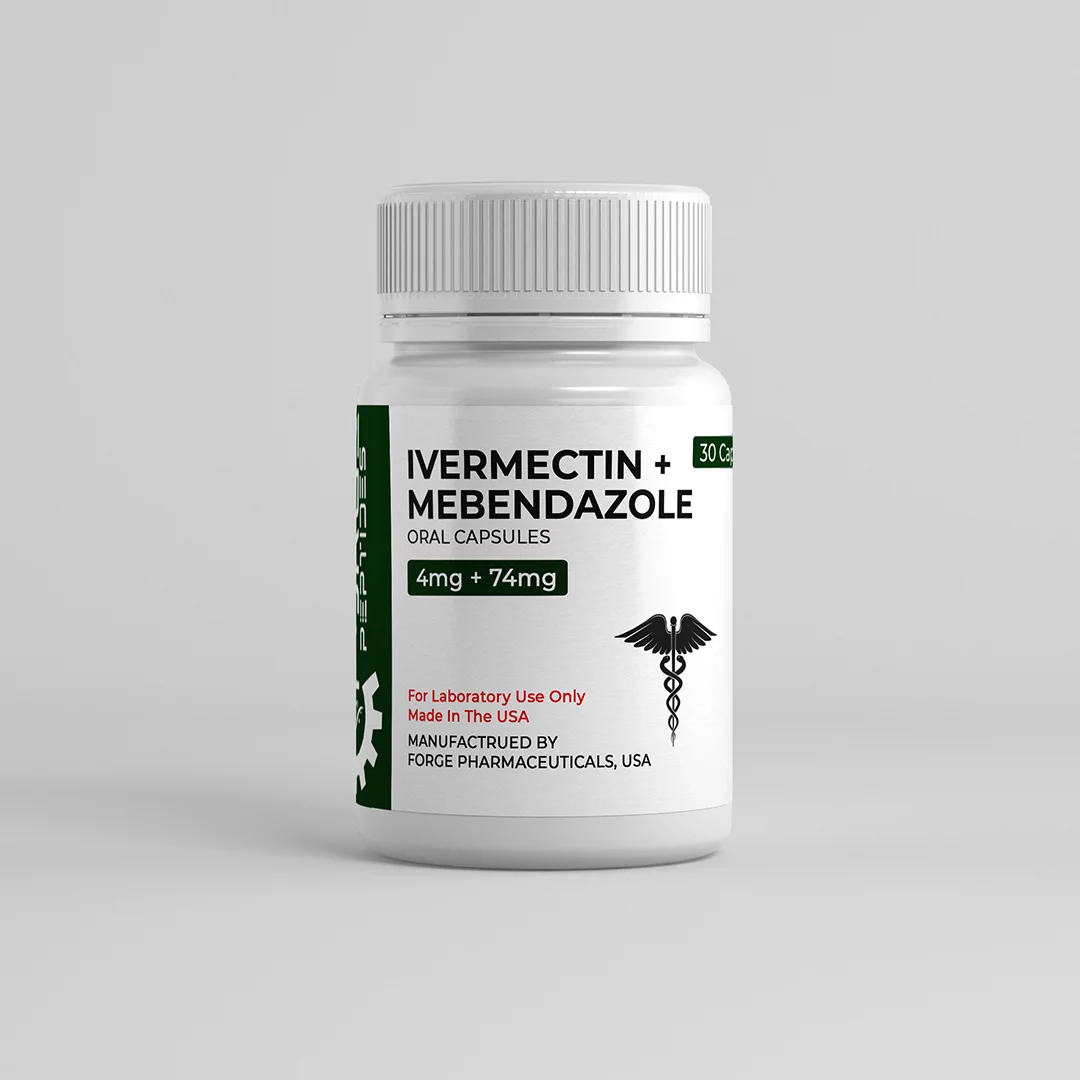

Ivermectin 4mg + Mebendazole 74mg: 30 count
This combines two well-established compounds, ivermectin and mebendazole, studied here in a comparative research context. Researchers study their interaction with different cellular pathways. Sold for research and laboratory use only — not for human or veterinary use.

Ships same day from California on orders placed before 2PM PST · UPS Priority, 1–3 days
About This Product
Ivermectin + Mebendazole is a multi-component research blend combining independently verified peptides, each with its own established CAS number and molecular profile — supplied by Warrior Makers as a tablet preparation for peptide infused products & others applications.
What is Ivermectin + Mebendazole?
This combines two well-established compounds, ivermectin and mebendazole, studied here in a comparative research context.
What Does Ivermectin + Mebendazole Do?
Researchers study how these compounds interact with different cellular pathways as part of comparative pharmacology research.
Is Ivermectin + Mebendazole Safe to Use?
Ivermectin + Mebendazole hasn’t been evaluated by the FDA, and there’s no established safety data for use in humans. This product is intended for research and laboratory use only — not for human or veterinary use, and not for diagnosing, treating, or preventing any disease.
Where to Buy Ivermectin + Mebendazole?
You can buy Ivermectin + Mebendazole directly at Warrior Makers here, backed by third-party lab tests and Certificate of Analysis (COA) availability. Manufactured under controlled conditions and intended strictly for research and laboratory use.
Frequently Asked Questions
Is Ivermectin + Mebendazole FDA approved?
No — Ivermectin + Mebendazole isn’t approved by the FDA and is sold strictly for research use.
How does Ivermectin + Mebendazole ship?
As research tablets, not for human consumption.
How should Ivermectin + Mebendazole be stored?
Store in a cool, dry place away from direct light prior to laboratory use.
This product is intended for research purposes and laboratory use only.
Not for human or veterinary use. Not intended for consumption, diagnosis, treatment, or prevention of any disease.
Specifications
- Product Name
- Ivermectin + Mebendazole
- Research Category
- Small Molecule Blend / Antiparasitic Research
- Available Contents (mg, mcg)
- 4mg + 74mg, 30ct
- Physical Form
- Tablet
- Solubility
- Soluble in bacteriostatic water
- CAS Number
- Ivermectin: 70288-86-7; Mebendazole: 31431-39-7
- Molecular Formula
- Ivermectin: C48H74O14; Mebendazole: C16H13N3O3
- Molecular Weight (g/mol)
- Ivermectin: 875.10; Mebendazole: 295.29
- Amino Acid Sequence
- Blend of Ivermectin and Mebendazole
- Purity Documentation
- Certificate of Analysis (COA)
- Identity Testing
- HPLC / LC-MS
- Purity
- 99%+ (HPLC Verified)
- Storage Conditions
- Room Temperature, sealed, protected from light
- Shipping
- Standard Shipping
- Shelf Life
- 36 months from manufacturing
- Intended Use
- RESEARCH USE ONLY
What researchers are saying
Amazing product amazing shipping amazing company loved their podcast
Shipping & Handling
You May Also Like
Legal Disclaimer: For research purposes only. Not intended for consumption, clinical application, or diagnostic use. The buyer assumes full responsibility for appropriate handling, usage, and adherence to all relevant laws and regulations.
Write a Review